
Allen County Civil Docket Searches
Major civil litigation belongs to the Allen County Court of Common Pleas, General Division. The Allen County Clerk of Courts keeps its records. The entry point is the official Allen County eServices / CourtView gateway. It offers Case Search, eFile, Quick Pay, and Calendar functions. The public interface does not publish a complete field list. So do not count on a specific name, judge, date, or document filter. Some Common Pleas records simply do not appear online. In that situation, go to the Clerk's Legal Department counter. You can also send a specific public-record request. A Lima Municipal civil or small-claims case runs through the Municipal clerk and court channels. Match the court on the summons and the claim amount first, and the docket search falls into place.
- Keep the case number, caption, summons, or other document that identifies the court.
- Choose Common Pleas General Division for the major civil case path, or Lima Municipal Court for the civil or small-claims path within its jurisdiction.
- Use the appropriate official portal or ask the clerk to locate the specific existing case file.
- Read the docket chronologically, then compare its newest entry with the current notice or signed order.
- Request the actual judgment, order, or certified copy from the clerk when that document is needed.
Two Civil Courts, Different Docket Lanes
Jurisdiction splits Allen County civil dockets into two lanes. Common Pleas General Division handles the major civil litigation. Lima Municipal Court takes civil matters where the disputed amount does not exceed $15,000, plus small-claims contract or tort cases up to $6,000. Lima's clerk also treats rent-escrow matters and Bureau of Motor Vehicles appeals as civil-division work. So the word "civil" alone will not tell you who holds the record.
| Case lane | Where the docket is kept | Useful starting point |
|---|---|---|
| Major civil litigation | Common Pleas General Division / Allen County Clerk of Courts | eServices, Legal Department, or a targeted records request |
| Civil claim at or below $15,000 | Lima Municipal Court Clerk | Municipal civil clerk and court channel |
| Small claim at or below $6,000 | Lima Municipal Small Claims Docket | Municipal clerk and small-claims forms/process |
Note: A summons and the amount claimed are better jurisdiction clues than a broad hunt for "civil records."
Civil Dockets: What They Show
Think of the civil docket as the activity index for the case. It is not a stand-in for every filed document. Local docket entries use terms such as complaint or petition, pleading, motion, service, pretrial, order, judgment entry, certificate of judgment, wage garnishment, debtor's examination, small-claims transfer, appeal, certified copy, and court costs. Treat those labels as your vocabulary list for reading an Allen County entry. One caution: an online display does not always show party roles, document images, judgment totals, collection balances, or a definition for every code. The docket tells you what happened. The file tells you the rest.
| Opening filing | A complaint or petition in Common Pleas, or a complaint or small-claims filing in Municipal Court. |
|---|---|
| Service and response | Clerk-maintained filings and service-related entries showing the progress after a case begins. |
| Motion or pretrial | A request, order, notice, or scheduled case-management event before trial or judgment. |
| Judgment entry | The formal court entry recording a decision or judgment, rather than merely a calendar row. |
| Certified copy | A clerk-authenticated copy, distinct from a web display or ordinary photocopy. |
The Allen County Clerk public-records policy explains the local inspection, copying, and redaction route.
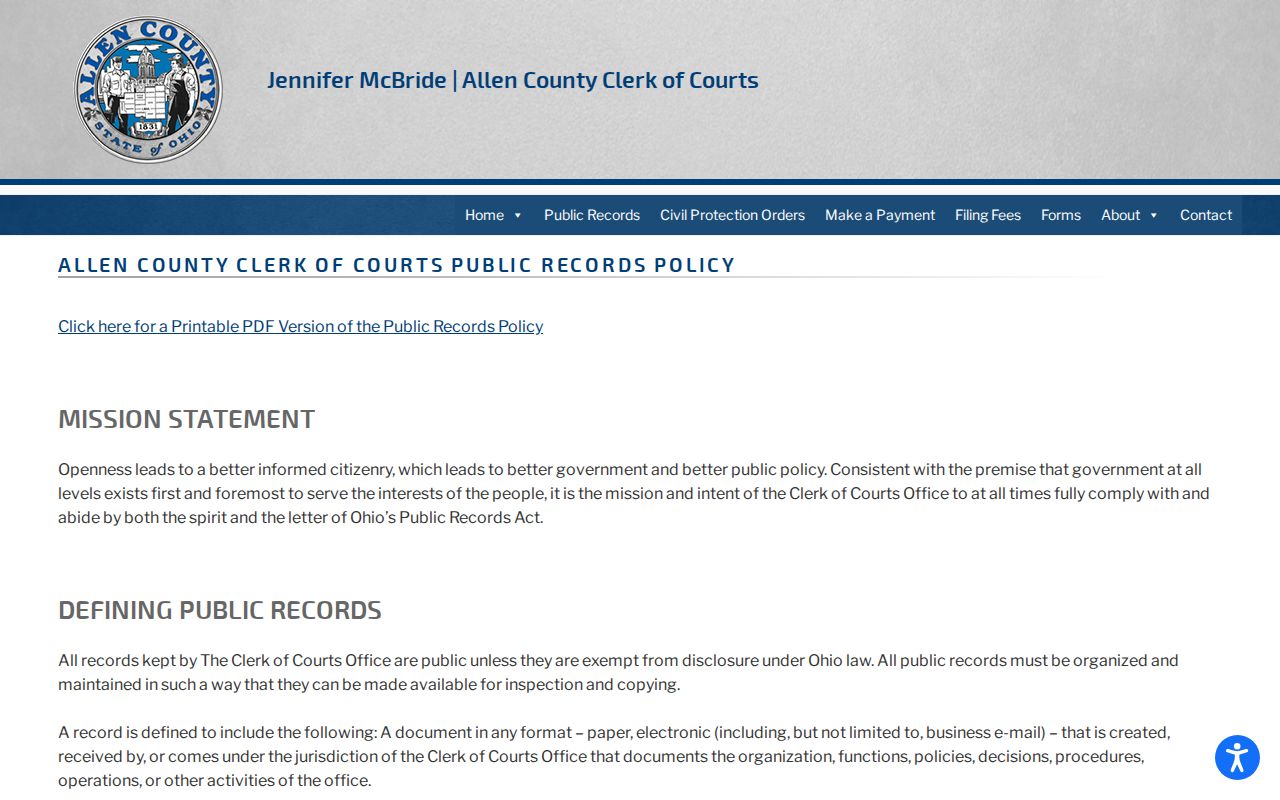
When the docket names a document you need to see or copy, the Clerk's records request policy is the route to use.
Common Pleas Civil Cases Are a Major Local Docket Share
Civil work dominates the Common Pleas docket. The court's own overview puts civil matters at approximately 65% of its judges' docket. It reports about 800 new civil cases each year. The county names personal injury, contracts, workers' compensation appeals, and medical or legal malpractice as examples. That volume matters for your request. Give the clerk the case number and court name. Skip the broad description and hope.
These figures count filings only, not outcomes or what any single online record will contain.
What Cases Fill the Civil Docket
Common Pleas and Lima Municipal both carry civil activity, but the lanes differ. Common Pleas dockets hold personal injury and contract disputes. Workers' compensation appeals and medical or legal malpractice appear there too. Lima's civil division covers qualifying civil claims, small claims, rent escrow, and BMV appeals. Its public form list hints at what can happen inside a case. Wage garnishment, notice to leave premises, certificate of service, and limited-driving-privilege civil filings all appear there. The forms teach you the local vocabulary even before a search.
- Complaint or petition and later pleadings
- Service-related activity and motions
- Pretrial, hearing, trial, and judgment entries
- Small-claims, rent-escrow, or qualifying municipal civil matters
- Post-judgment activity such as certificates, garnishment, debtor examination, execution, or appeal where applicable
A form list clarifies procedural terms. It does not mean every completed form is searchable online or handed over without a clerk request.
Lima Keeps Regular and Small Claims Dockets Separate
Lima Municipal Local Rules set up two separate dockets. One is a Regular Docket. The other is a Small Claims Docket. A small-claims case moves to the Regular Docket only after a timely motion and a signed entry, though the court can also transfer a matter on its own motion. That local rule explains a common puzzle. A docket label can change without the dispute becoming a Common Pleas case. The county's Clerk forms page posts the public-record request and fee materials. Lima's own small-claims process runs through a separate court channel.
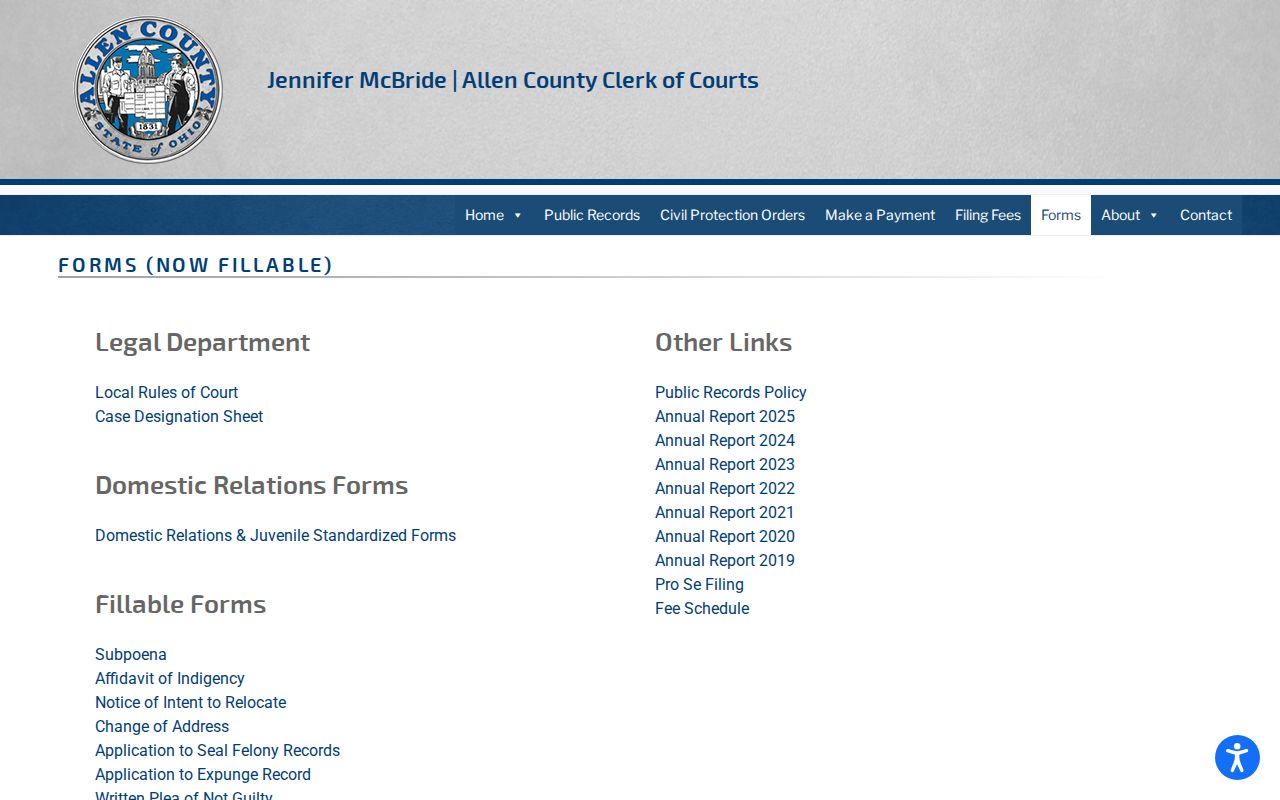
Forms can point you to the right kind of civil record. The docket and the court file still decide what actually happened in a case.
Hearings on the Civil Docket
A civil case moves through filings and service. Then come pretrial and motion activity, hearings, trial or other resolution, and judgment. A docket setting or notice only tells you an event was scheduled. The signed order or later judgment entry carries the fuller record. It shows what the court actually did. For Common Pleas cases, the Clerk maintains the pleadings, motions, orders, decrees, judgments, and proceedings. For Municipal cases, the civil clerk maintains that court's record. Always check a current court date against the newest notice, order, or clerk information. The County's Court Schedule page explains why a calendar listing is only a snapshot. A continuance can change the assignment. Use the calendar to confirm dates. Use the civil case file for everything else.
Filing Fees Are Not Copy Fees
Common Pleas charges filing fees, not copy fees. The court's 2026 fee appendix puts a general civil complaint or petition at $325. A timely jury demand runs $500, and a certificate of judgment filing at $30. Preparing or releasing that certificate adds $5. None of that buys a copy of an existing docket. These are case-starting and court-processing charges.
Copying is priced separately. The Clerk's request materials list plain copies at $0.05. Certified copies run $1 per page. Lima's published schedule differs: $0.25 per ordinary page, $2 per certified document, and a $150 appeal deposit. Ask the actual clerk to confirm the current charge. Also ask that the record you want is public and available.
| Request or filing | Published figure and meaning |
|---|---|
| Common Pleas general civil complaint/petition | $325 filing fee, not a record-copy charge |
| Common Pleas plain/certified copy | $0.05 plain copy; $1 per page certified copy |
| Lima ordinary/certified copy | $0.25 per page; $2 per certified document |
When a Civil Docket Is Unavailable Online
Common Pleas dockets that never reach the web still exist. They sit on paper at the Clerk's office. Original documents may be examined during business hours, though they cannot leave the office. Oral requests are accepted. No requester has to give a name or explain the intended use. The request just has to be specific enough for staff to locate and review the record. Advance payment for copies can be required. Any redaction will come with its legal authority cited. The Allen County Clerk contact information page shows the office's legal records contact route.
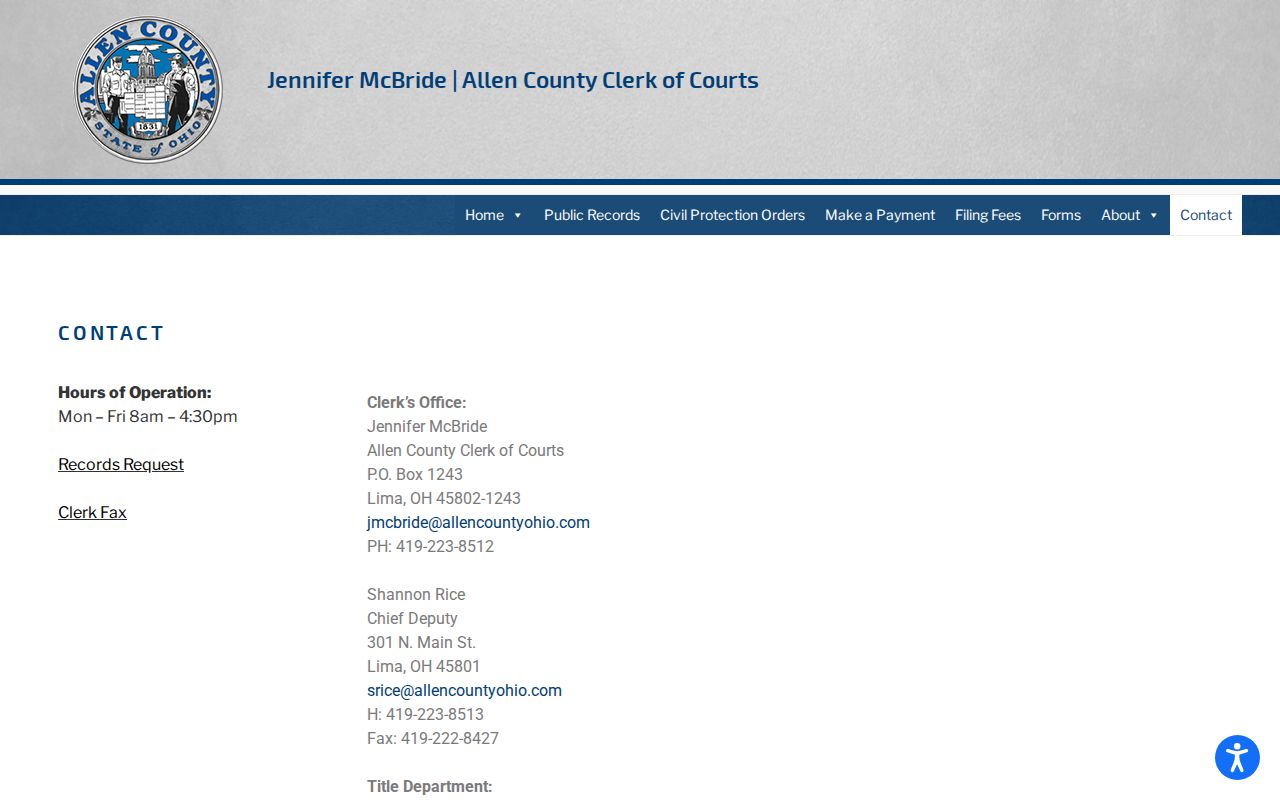
When eServices returns nothing, name what you need. A request that includes the court, the case number, the document, and an approximate date gives the Clerk a workable path to the existing public file.
Who Can See Civil Dockets
Ohio court records are governed by the Ohio Rules of Superintendence 44 through 47. Other applicable law applies too. The Ohio Public Records Act covers inspection and copying too, subject to its exceptions. Allen County Clerk policy treats records as public unless an exemption applies. Still, court rules, confidentiality provisions, protective orders, redaction rules, and sealing orders can each limit access. What you may see depends on the case.
Access boundaries:
Ohio Sup.R. 44–47 sets court-record access rules, including remote-access and confidentiality boundaries.
Ohio Revised Code 149.43 is the Ohio Public Records Act and addresses inspection and copying of public records.
Ask the clerk for the public or redacted version of a specific existing filing. A record category that is sealed or confidential is not made available by changing search terms.
Note: A docket shows activity in a civil case. Whether a particular document can be inspected or copied is set by the court's access rules.