
Lima Court Docket Searches
Read the court name before typing anything into a search bar. That one step keeps a Lima docket search from dead-ending. For a Municipal traffic, criminal, civil, small-claims, or payable citation matter, use the official Lima Municipal Online Services search. A Common Pleas, Domestic Relations, or appeal matter belongs instead with the Allen County Clerk of Courts through its eServices route. What controls is the court printed on the Lima paperwork, not where an event happened.
- Read the Lima court name, case number, or citation number on the ticket, summons, notice, or prior entry.
- For a Lima Municipal matter, choose the official lookup path that matches information already on hand.
- Read the current entry or schedule as a status check, then confirm a near-term setting with the Lima clerk.
- Use Allen County eServices or the Clerk when the Lima matter is actually filed in Common Pleas or Domestic Relations.
- Ask the custodian for a specific Lima docket entry or copy if the public result does not answer the question.
Ohio has no single statewide trial-court docket open to everyone. So a Lima result does not prove every Allen County case sits in one shared system.
Lima Municipal Search Fields
The official Lima Municipal interface gives you several ways to pull up a case. Search by case or citation number. Try a driver license with its issuing state, or a Social Security number paired with a date of birth. A license plate with state also works. So does a name with a date of birth. A business name works too. Stick to information you are authorized to use for a Lima case lookup. The court makes no promise here. Not every record carries document images, and there is no set public refresh time.
| Lima search path | Information shown by the interface |
|---|---|
| Case or citation number | Exact court or ticket identifier |
| Name | First name, last name, and date of birth |
| Driver or plate | Identifier paired with issuing state |
| Business | Business name path |
Lima Municipal Court splits its work in two. The clerk handles civil matters on one side and criminal or traffic cases on the other.
That division matters for a Lima docket search. The official Lima clerk page lays out these clerk of court duties, and it also explains why a citation payment screen never adds up to a full civil docket.
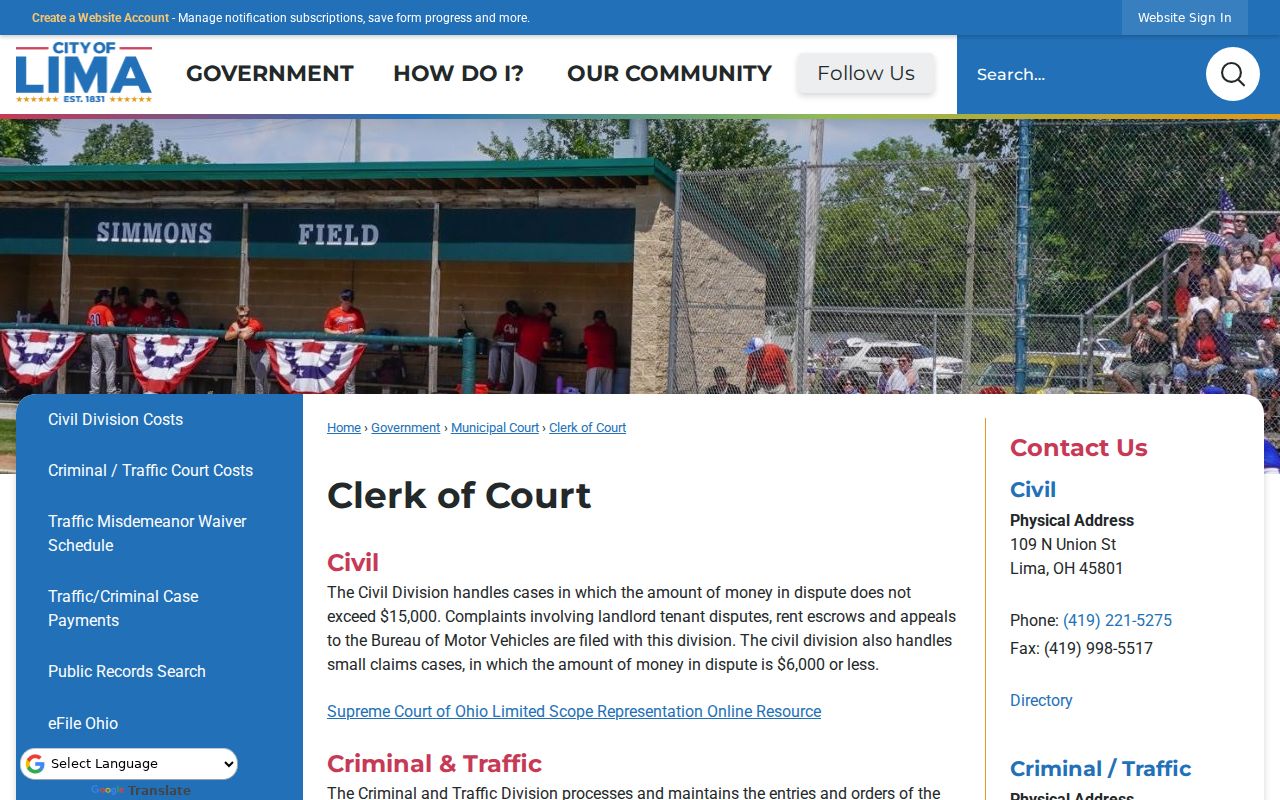
This Lima record channel stands apart from the county clerk's General Division and Domestic Relations files.
Inside the Lima Municipal Court
Lima Municipal Court handles traffic, misdemeanor criminal, and civil matters from across Allen County. The stated civil limit is $15,000. Small claims caps at $6,000. Lima also keeps the early record for felony charges. That record runs from arrest through preliminary hearing, before a case transfers to Common Pleas. A Lima docket is therefore a genuine local court record, not just a city-government notice.
Find the Municipal Court at 109 N. Union Street. The Allen County Clerk's Legal Department sits downtown. Its address is 301 N. Main Street, and it maintains a different set of records for Common Pleas, Domestic Relations, and Third District appeals. Lima is the county seat, but that civic fact does not merge the two offices. Allen County's municipality history adds the civic context around the city and its neighbors.
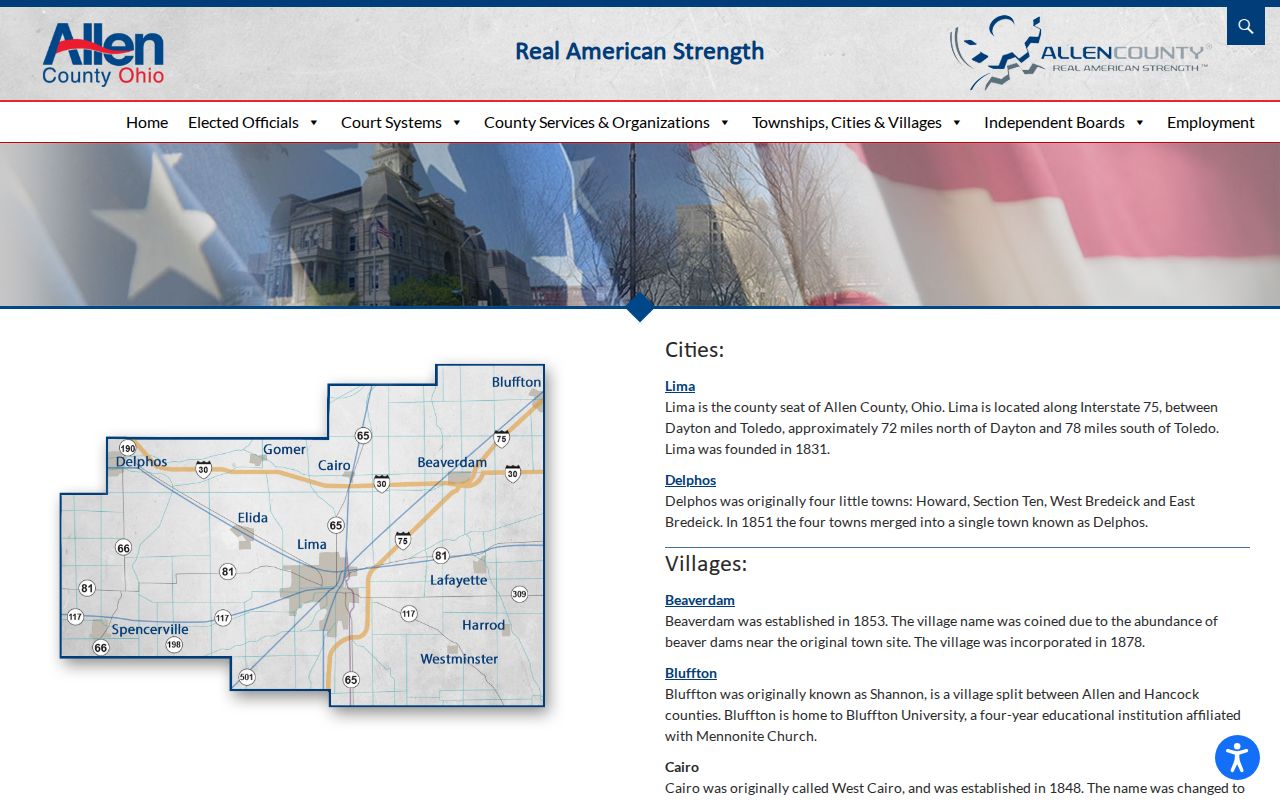
The Lima address helps with routing. Still, the court printed on a record controls where its docket lives.
Lima Courtroom Schedule Snapshot
Lima publishes separate weekly schedules for Courtrooms 1, 2, and 3. Each row can show a Lima case number. It may also list a charge or ordinance reference, hearing type, date, time, and agency. That makes the schedule handy for checking a listed appearance. It is not a certified order. It is not a complete case history, or a promise that a hearing will happen as listed. The Lima Court Room Schedules page is the official weekly source. Traffic arraignments recur there on Tuesday and Thursday mornings. Even so, a current notice, entry, or clerk confirmation beats the calendar for one person's date.
Finding Lima Court Dates
Start with the paperwork. For a Lima court date, that means the citation, summons, or latest order. Then pair the official case or citation lookup with the current courtroom schedule. A changed setting may appear as an arraignment or plea. It could also show up as a pre-trial hearing, preliminary hearing, or trial event. The labels are not interchangeable. Each one names a distinct kind of Lima appearance, not just another court date.
| Date | The Lima setting date in the current entry, notice, or weekly schedule. |
|---|---|
| Time | The listed start time; confirm it when a later Lima order conflicts. |
| Courtroom | One of the separately posted Lima courtroom schedules when shown. |
| Case number | The strongest identifier for matching a Lima schedule row to a court file. |
| Setting type | For example, arraignment, plea, pre-trial, or preliminary hearing. |
Note: A Lima weekly schedule is only a snapshot. When details differ, a new court order or clerk confirmation controls.
Lima Smart City Docket Change
Lima Municipal Court reported a big change. Its Smart City Initiative software went live on May 5, 2025, replacing a system used for more than 30 years. Older Lima search instructions can be stale because of that software swap. Trust the live court links and the current docket. Skip any saved screen or outdated payment directions. The same 2025 report says e-filing was implemented. Electronic hearing notifications were planned for 2026. The Supreme Court statistical-reporting materials supply the statewide context for current court-management reporting.
This reported technology change is why a current court record beats an old interface instruction every time.
Lima Specialty Court Reviews
Lima Municipal Court's 2025 annual report identifies certified Treatment Courts and a Veterans Court. So a Lima docket can carry a review or status event. It is tied to a specialized court program. The label does not open confidential treatment, assessment, or participant information to the public. Read the Lima entry for the scheduled court action. Take file questions straight to the clerk.
Specialty-court activity is one more reason a Lima calendar row is not a full case record. The court's active entry, any public order, and the clerk's access rules define what may be inspected. A Lima review setting can change. So confirm through the current court channel.
Lima Traffic Ticket Lookups
Lima Municipal Court logged 12,240 new traffic and criminal cases in 2025. It added 3,866 civil cases. Traffic accounted for 59 percent of that incoming load. Not every citation comes from Lima Police either. State, county, township, and neighboring municipal agencies all write tickets that land in the same court. So the court line printed on the ticket matters. It tells you more than the agency that stopped you.
The waiver schedule the court publishes gives you seven days to resolve waiverable traffic or misdemeanor matters. Some listed situations still require a personal appearance. Treat its amounts, like the court cost schedule, as a published guide. It is not a quote for your particular citation. The ticket and the court's current directions control what happens in a specific Lima case. The Lima criminal and traffic cost schedule is the official posting of those charges.
The 2025 filing total shows scale, nothing more. It cannot tell you the status of any one ticket. A Lima docket entry records an event. Only the live entry, the citation, or the clerk can confirm whether a waiver, appearance, continuance, or payment plan applies. Records can also change after a citation is first issued. Check the latest court information instead of trusting an old schedule row.
For Lima's population background, the Lima QuickFacts table publishes the Census figures for the city.
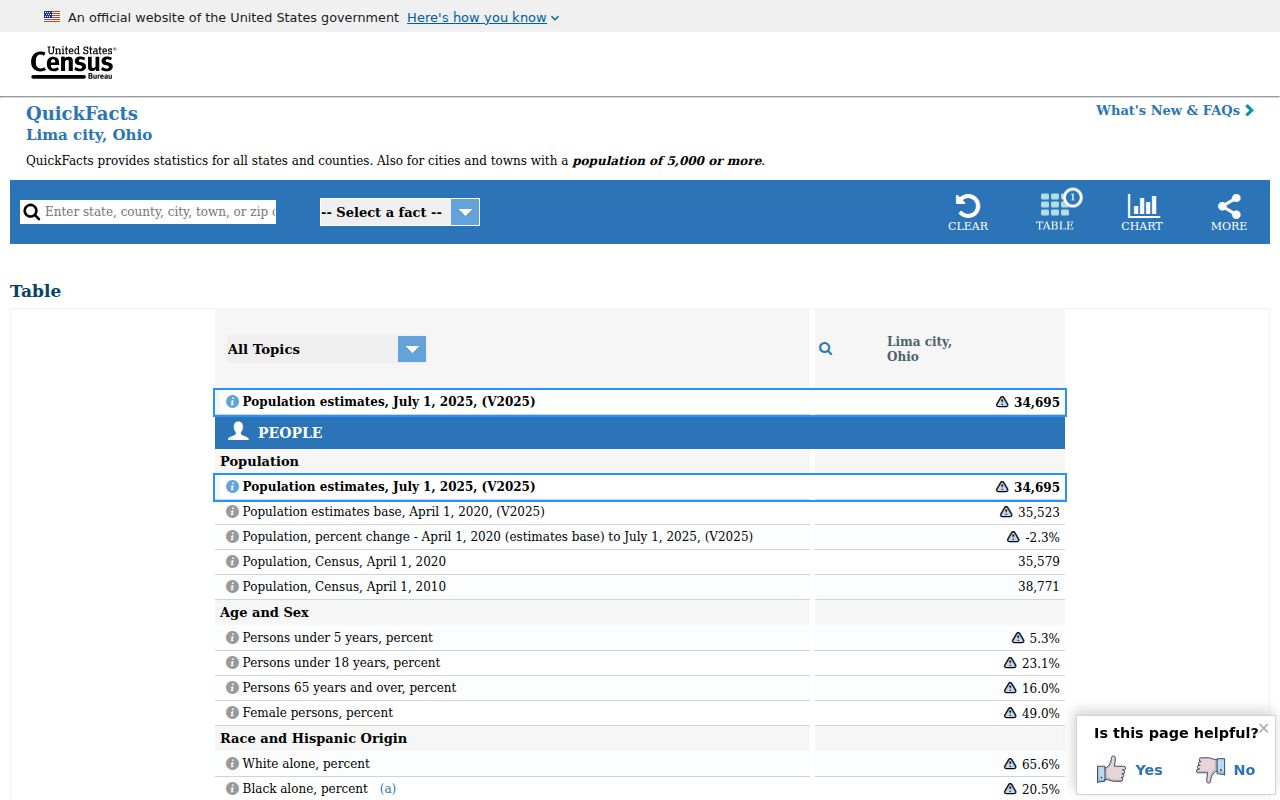
Population helps explain why Lima's court dockets stay busy. It says nothing about any single case, though, and a citywide count should never be read as a clue to one file's status.
Lima Civil and Small Claims
Civil filings in Lima follow the same court-check habit. You would use it for a traffic case too. Lima Municipal Court handles civil claims up to $15,000. Its small claims division goes to $6,000. Anything bigger belongs one floor up. That is the Allen County Court of Common Pleas, General Division. A Lima street address alone tells you nothing about which court holds the file.
That ceiling explains why a Lima court search sometimes comes up empty for a large civil filing. If the case sits in Common Pleas, the Allen County Clerk of Courts keeps the record. The Municipal clerk only holds the Lima civil and small-claims docket filed at that level.
So two Lima disputes with similar parties can carry different case numbers. They can also answer to different clerks. Check the court name on the filing notice first. Then ask for your Lima case history or copies from whichever office is named. The court line and the most recent notice will point you to the office maintaining the active docket.
How Lima Cases Reach the County
A felony that starts in Lima Municipal Court does not always finish there. Arrest and preliminary-hearing entries show up on the municipal docket first. After that, the case moves to the Allen County Court of Common Pleas, General Division. Big civil claims travel the same road to Common Pleas. Domestic Relations runs its own division with a separate clerk channel. None of this is an appeal in every case. It simply means a different court now holds the active Lima record. That court is where the docket search should point.
Docket flow: Lima Municipal Court › Allen County Courts › Allen County Court of Common Pleas, General Division
When an appeal qualifies in Allen County, the Ohio Third District Court of Appeals hears it, and the Allen County Clerk of Courts serves as the Third District clerk for those cases. The Third District clerk roster and rule spell out that appellate clerk relationship for Lima-connected matters.
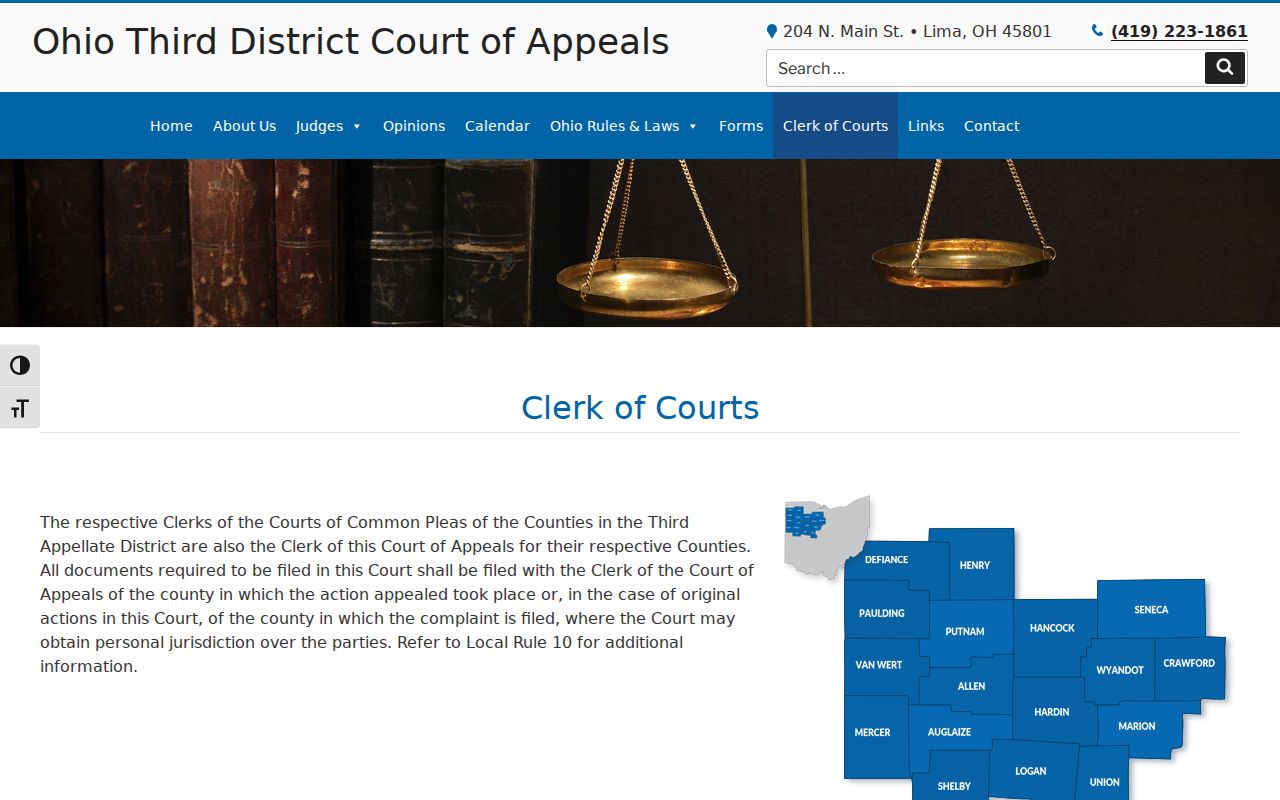
None of this puts every Lima record into an appeal docket. The originating court file is still the first place to look.
Lima Clerk Copies and Records
The Lima Municipal clerk keeps the local public case records. Lima rules let the public inspect files by arrangement with the clerk during business hours. Nothing leaves the office. The posted municipal schedule sets copy fees at $0.25 per page. A certified document costs $2. A download disc costs $3. Those are Municipal copy figures, not county filing fees.
Common Pleas copies follow the Allen County Clerk's own policy and request route instead. When you ask, name an identifiable Lima docket, entry, disposition, or document. A focused request gives the clerk something exact to pull and review.
Who Can See Lima Court Records
Ohio court rules and lawful restrictions govern who sees a Lima court record. A public docket can display filings, settings, entries, orders, and dispositions. Protected personal data may be withheld or redacted. Sealed material may be too. Juvenile information, protected identifiers, victim details, and some confidential records all need special care. Public access never guarantees that every document or field appears online.
Key Rules:
Ohio Sup.R. 44–47 governs court-record public and remote access.
Ohio Public Records Act provides inspection and copying rules, subject to lawful exceptions.
Ohio R.C. 1905.21 requires a mayor’s-court clerk to keep a docket, where that local court is named on a citation.
For a Lima public-file request, state the court, the case number, and the exact item you want. The Municipal clerk handles the local process for a public case file. The county Clerk handles a Common Pleas record. A certified Lima copy comes only from the clerk holding the original. No online result replaces that record.
Access also turns on record type. A public Municipal schedule may show just a date and a hearing label, while an examined Lima court file can include entries and orders the schedule never displays. A Common Pleas filing has its own custodian even when the incident began in Lima. State court rules protect personal identifiers and restricted case categories, so the public version of a Lima filing may differ from the unredacted original.