
Allen County Criminal Docket Searches
Skip the idea of a single Allen County portal that covers every trial court. It does not exist. A felony bound over to the Allen County Court of Common Pleas, General Division lives in the Clerk of Courts system. The door to it is the eServices / CourtView gateway. Case Search, eFile, Quick Pay, and Calendar all sit inside. Anonymous visitors get limited fields, though. A docket search there can come up empty even when the case file exists. When that happens, go to the clerk counter. You can also file a public-record request aimed at the exact case you need.
Misdemeanors and traffic tickets are a different stream. Lima Municipal Court keeps its own criminal entries. Its Municipal Online Services site handles case and citation lookups for that court. Bring the exact case number or citation number from your paperwork. Never assume a Common Pleas number will work in the Municipal system. The two courts number their dockets separately, and mixing them up wastes a trip.
- Read the court named on the current paperwork and decide whether the matter is in Common Pleas, Lima Municipal Court, a Probate or Juvenile division, or a mayor's court.
- For a Common Pleas felony case, use eServices or contact the Allen County Clerk of Courts; for a Lima misdemeanor, traffic, or preliminary felony matter, use the Municipal channel and Clerk.
- Use the case number first where available, then compare the resulting docket entries with the current notice, order, or citation.
- Read events in date order and distinguish a hearing setting from a judgment entry or other final court action.
- Ask the custodian for inspection, a plain copy, or a certified copy when the needed entry or document is not available online.
Why a Felony May Appear in Two Local Courts
Stage is the biggest trap in an Allen County criminal-search. Lima Municipal Court handles a felony from arrest through the preliminary hearing. Then it transmits the case to Common Pleas. From that filing forward, the General Division is the felony court. So an early arrest record and a later indictment-level case can carry different numbers. They may also carry different clerks, different calendars, and separate docket histories.
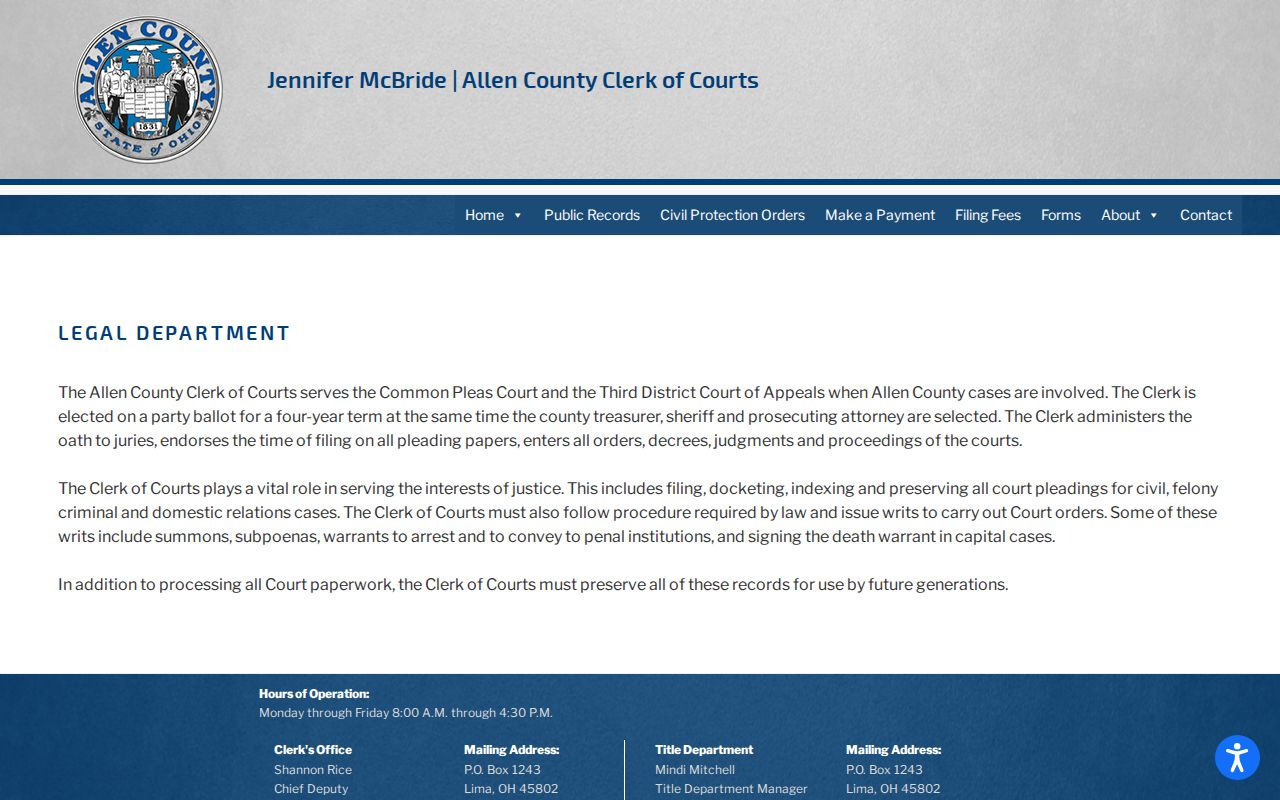
For the Common Pleas piece, the Clerk's Legal Department description lists filing, docketing, indexing, preservation, and public dissemination among the Clerk's duties for felony criminal pleadings. Once a case sits in General Division, that office is the record channel to use.
That is why the later felony docket comes from the county clerk rather than from the Municipal online record. The two are related, but not one continuous file.
Note: A preliminary-hearing entry is an early felony-stage event, not a final Common Pleas disposition.
Criminal Dockets: What They Show
Think of a docket as the clerk's running log of a case. It records filings, settings, orders, and other activity in order. In Allen County you can expect a case identifier with the court or division. Expect the case type, the entries themselves, notices and settings, orders and judgments, and whatever status or disposition information the record holds. Municipal cases may also show bail, bond, financial sanctions, or payment-plan activity. Not every portal displays document images, balances, attorney fields, or every personal field. Read what is actually there.
| Case number | The court-assigned identifier. Lima schedules visibly use a year, type, and serial pattern such as YY-CRB-serial; Common Pleas patterns were not published in an official field guide. |
|---|---|
| Court and case type | Shows which local system maintains the entry and can distinguish a Municipal criminal or preliminary matter from a Common Pleas felony case. |
| Chronological entry | A filing, notice, order, hearing event, payment-related activity, or disposition recorded in the case history. |
| Setting | A scheduled event such as arraignment, pre-trial hearing, plea, preliminary hearing, or trial. It is not automatically a final result. |
| Judgment or disposition | A judgment entry, order, dismissal, conviction, transfer, or other supported outcome event. The research does not establish an Allen County final-code dictionary. |
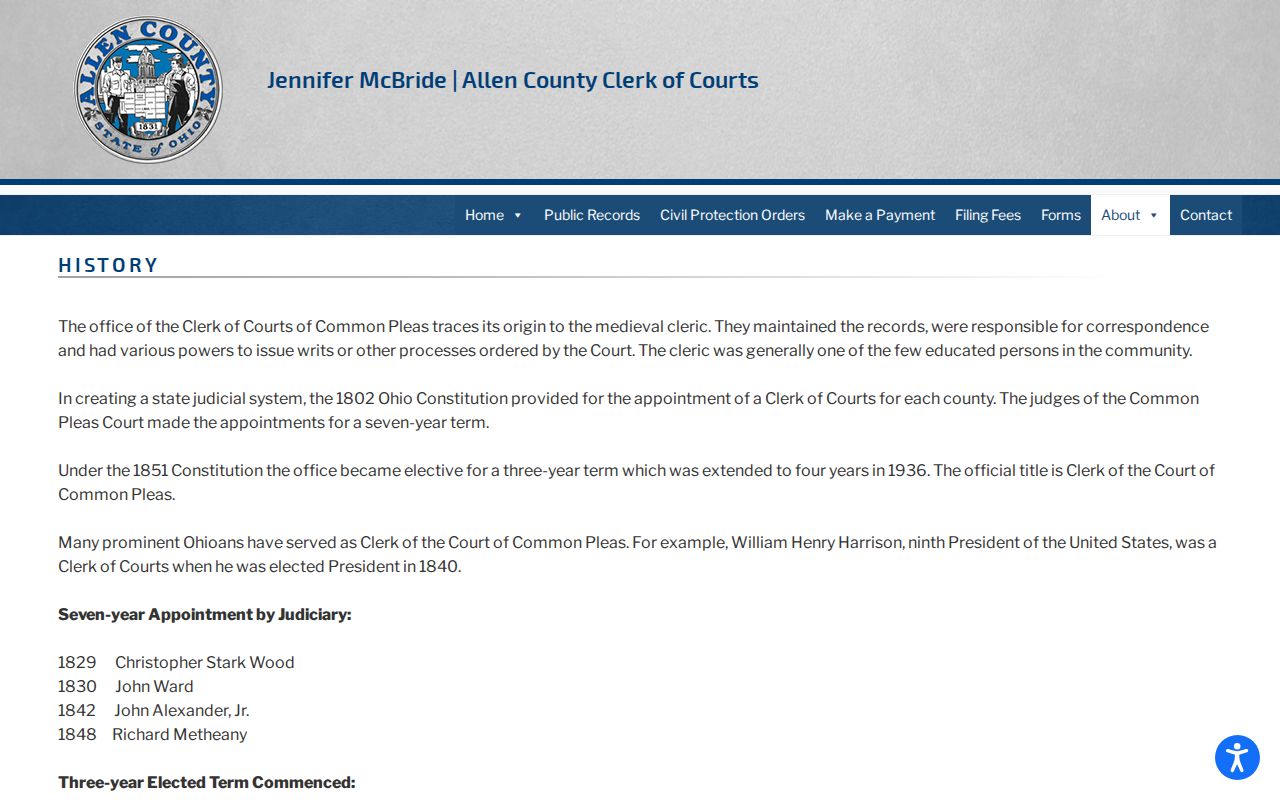
The official history of the Allen County Clerk of Courts shows an office built around keeping these court records intact over time. That long view is the office's whole job.
The docket entry and the filed order behind it are related records. They are not the same document, and the distinction matters when you need the real order.
Reading Lima Criminal Calendar Labels Carefully
Lima's weekly schedule labels cases with letter codes. The court uses CRB for criminal misdemeanor matters and TRD for traffic, plus categories for felony preliminaries. No complete Allen County code dictionary is published, though. A code points you to the right record path. Guessing a charge description or an outcome from it is a mistake.
- Arraignment
- An initial setting where a criminal or traffic charge and plea process are addressed. It is not automatically a trial.
- Pre-Trial Hearing
- A separate case-management setting appearing in Lima's published terminology.
- Plea
- A scheduled plea event. A separate judgment or disposition entry may be needed to determine the court's final action.
- Preliminary Hearing
- An early felony-stage hearing in Lima before the transfer or indictment path to Common Pleas.
- Trial to Court
- A Lima fee-schedule term for a bench-trial setting, distinct from a jury trial.
Note: The weekly schedule tells you a setting was listed. The current docket and its orders establish the fuller case record.
Criminal Case Stages on the Docket
Read docket events as a sequence, with the court transition in mind. A case may start with a complaint or arrest-stage record, move through arraignment and pre-trial or motion settings, and then reach a plea or trial. After that, the docket records a judgment, sentence, dismissal, transfer, or other disposition. A hearing label alone does not tell you what happened there.
Docket flow: Complaint or indictment › Arraignment › Bond or pre-trial setting › Motion, plea, or trial › Judgment or disposition › Sentence where ordered
For a Municipal felony preliminary, the transfer point is key. Once the case is transmitted and a Common Pleas file exists, later criminal activity lives on the General Division record path. Appeals are a separate layer entirely. An appeal from an Allen-origin final order goes to the Ohio Third District Court of Appeals, with the Allen County Clerk serving as appellate clerk for that court.
Allen County's Criminal Docket Has Separate Volume Lanes
Volume explains why the court name should come first. Roughly 35% of the Common Pleas judges' docket is criminal, with more than 400 new criminal cases each year. Lima Municipal reported 12,240 new traffic and criminal matters for 2025: 181 felony preliminary cases, 2,053 misdemeanor criminal cases, 554 OVI-category cases, and 9,452 traffic cases. Those numbers measure court workload, not individual outcomes.
With Municipal volume that high, and Common Pleas carrying the felony cases forward, a negative result in one court proves little. Check the documented stage and custodian before concluding a case never existed.
Allen County Criminal Docket Courts
Felony charges in Allen County land in the Court of Common Pleas, General Division. That is where the case sits once it is filed there. The Allen County Clerk of Courts keeps the General Division's filings and docket entries. The record also holds orders, decrees, judgments, and other proceedings. Misdemeanors and traffic matters go to Lima Municipal Court. That court also handles felony cases from arrest through the preliminary hearing. Its own Clerk keeps those criminal docket filings.
| Criminal matter | Custodian and practical path |
|---|---|
| Felony after Common Pleas filing | General Division and Allen County Clerk of Courts, using eServices or the Clerk's counter/request channel. |
| Felony arrest through preliminary hearing | Lima Municipal Court Clerk, with the Municipal record and weekly courtroom schedules as applicable. |
| Misdemeanor criminal | Lima Municipal Court Clerk and Municipal Online Services as applicable. |
| Mayor's-court eligible matter | The court named on the citation, municipal contact, and Ohio's mayor's-court information lookup. |
| Juvenile delinquency | Juvenile division and clerk through the lawful access process, because confidentiality may govern. |
When an Online Criminal Record Is Not Enough
An online docket is only one way in. For a Common Pleas record, the Clerk allows inspection during regular business hours and takes oral public-record requests, provided you give enough detail for staff to locate the record. Copies carry fees. The Clerk's research materials list $0.05 for a plain copy and $1 per page for a certified copy. Common Pleas Local Rule 2.15 lets you examine original documents at the office. Files never leave the building. Lima Municipal Court works on the same pattern. Its public-record rule allows arranged inspection with the Clerk during business hours, and files stay in the office too. The published municipal schedule sets $0.25 per ordinary page and $2 per certified document. These figures cover copies of existing records only. Paying them does not guarantee that a particular electronic image exists in the docket.
Practical request: Provide the court, case number, approximate date, and the specific docket entry or order sought. That lets the correct clerk locate an existing public record without being asked to reconstruct a case history.
Sealing Requests Have a Separate Clerk Process
Sealing works through a separate Clerk process. Allen County's Clerk offers an Application to Seal Felony Records among its fillable forms. An expungement form is there too. The 2026 Common Pleas fee appendix lists $100 for a criminal sealing or expungement proceeding once prior court costs are paid. That total breaks down into a $50 application fee and a $50 court fee. That charge covers the filing itself. It says nothing about statutory eligibility. Nor is it a promise that a docket will vanish from every public channel. The statutes and the court's findings decide access in the end. A person seeking action on that person's own case should use the Clerk's official form path. The applicable court procedure applies as well. A public docket search does not decide these applications.
Access Rules for Criminal Dockets
Ohio court-record access rests on the Rules of Superintendence 44 through 47 plus applicable law. The Ohio Public Records Act requires public offices to prepare records for inspection promptly. It also requires copies within a reasonable period, subject to lawful exceptions. Court records still face limits. Confidentiality rules, redaction requirements, and court orders can all narrow what a docket shows. Lima Municipal Local Rule 5.1 spells out protected personal and private information. The list includes Social Security and other identifiers. Driver-license and account information appear as well. So do protected juvenile and victim details, plus medical or tax material. A public docket or redacted filing may omit information that appeared in the underlying documents.
Key Ohio access rules:
Ohio Sup.R. 44–47 governs definitions and public, remote, and bulk access to court records.
Ohio Revised Code 149.43, the Ohio Public Records Act, addresses inspection and copies of public records, subject to exceptions.
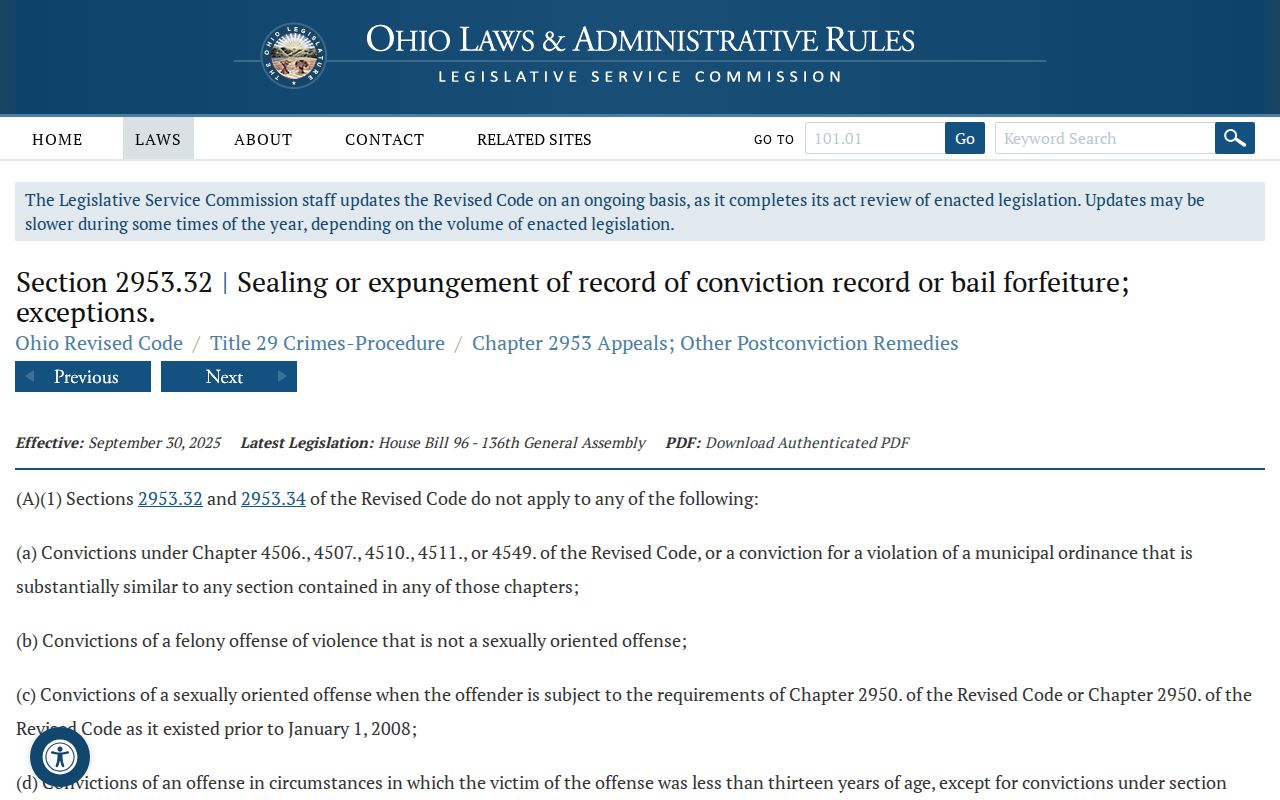
Ohio Revised Code 2953.32 makes sealing or expungement of conviction and bail-forfeiture records case-specific and subject to statutory conditions.
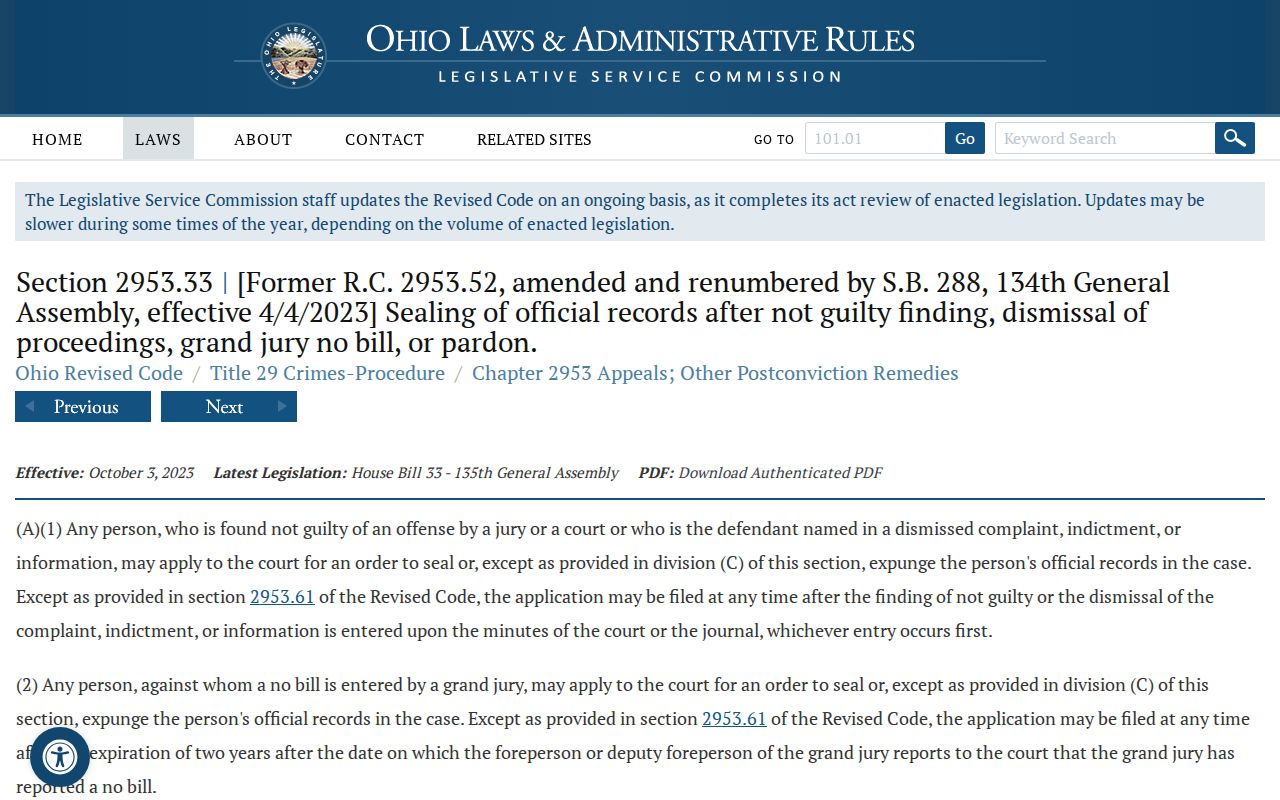
Ohio Revised Code 2953.33 provides a statutory route for certain not-guilty findings, dismissals, no bills, and pardons, subject to court findings.
For the conviction-record sealing and expungement framework, read the official R.C. 2953.32 text, which sets out the full statutory scheme.
Allen County's Clerk makes sealing-related forms available, but the statute and the court's case-specific process control whether a record is restricted. The official R.C. 2953.33 text covers a separate class of qualifying case outcomes. Check it against your own docket facts.
If a docket result is restricted or missing, treat it as a court and clerk matter. It is not a defect in a general docket lookup.